
People don’t scroll Pinterest the way they scroll other social apps. They search it. Someone types “small balcony ideas” or “easy weeknight pasta” and Pinterest decides which pins to show. Keywords are how your pins get into those results.
The good news is that Pinterest keyword research is simpler than Google SEO. Pinterest shows you what people search for, right in the app. You just need to know where to look and where to put the words once you have them.
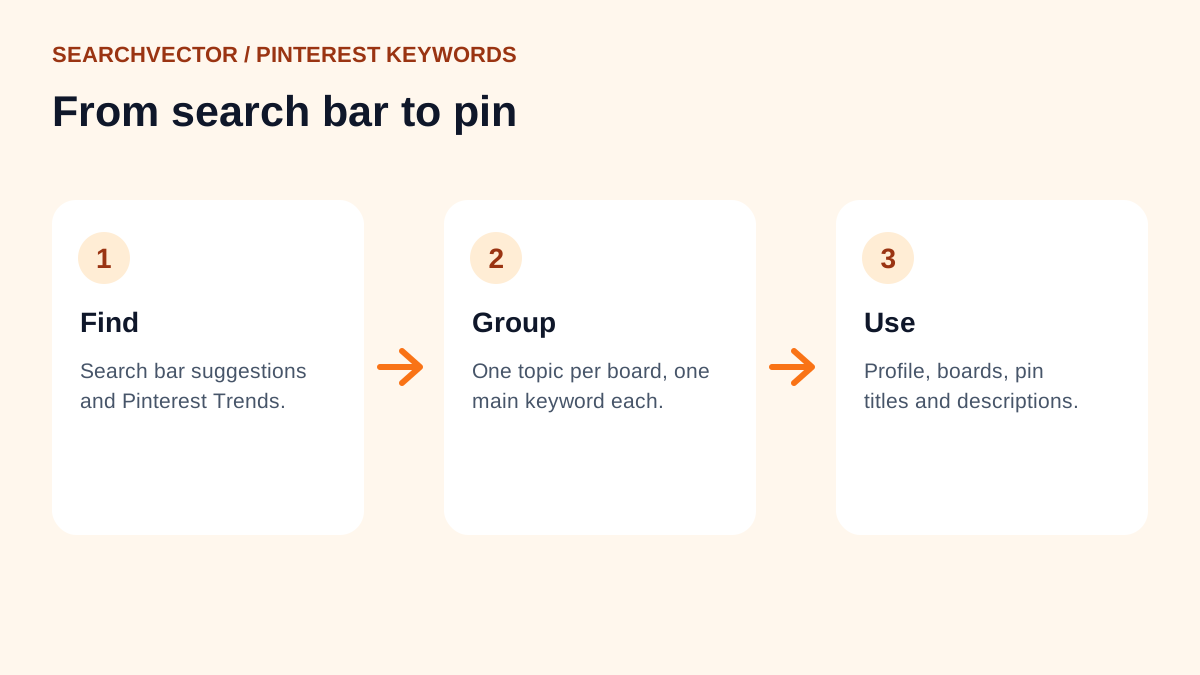
Here’s the process I’d follow, from finding the keywords to placing them on your profile, boards and pins.
What are Pinterest keywords?
Pinterest keywords are the words and phrases people type into Pinterest search. When your profile, boards and pins use the same words, Pinterest has a clearer idea of what your content is about and who might want to see it.
They tend to be descriptive and visual. On Google someone might search “living room paint”. On Pinterest they’re more likely to search “sage green living room ideas” or “cozy living room aesthetic”. That’s worth keeping in mind as you research.
How to find Pinterest keywords
1. Use the Pinterest search bar
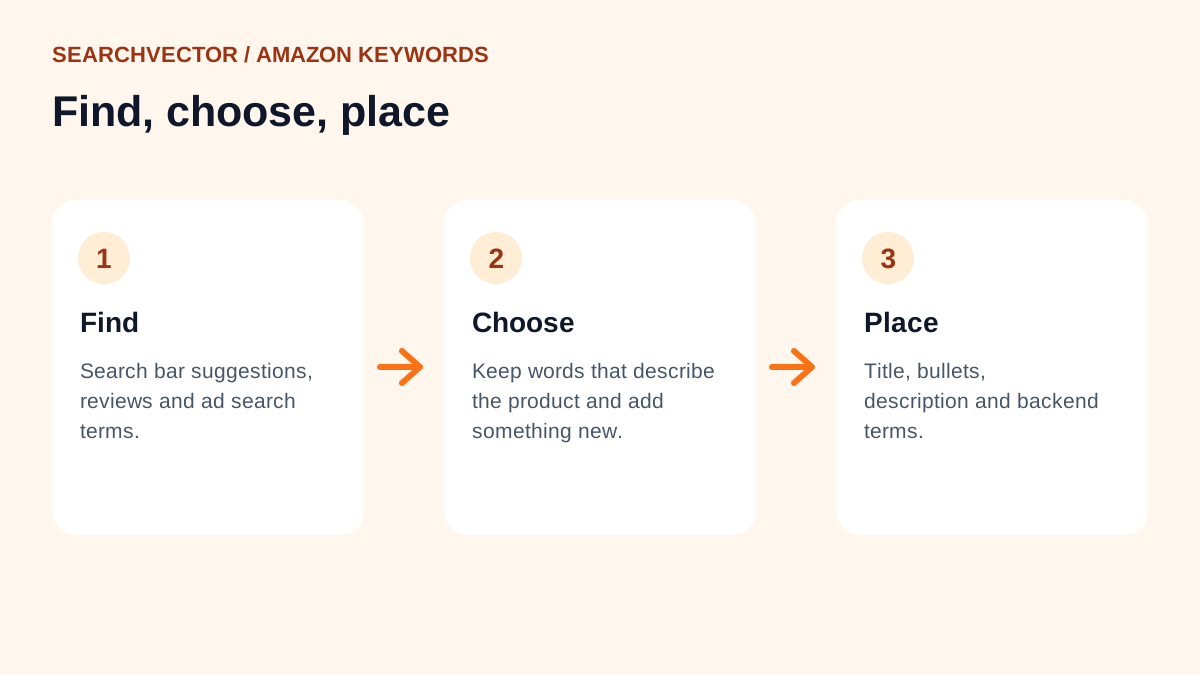
This is the best free source because the suggestions come from real searches on Pinterest. Type a broad topic, like “bedroom”, and don’t press enter. Pinterest shows a list of suggested searches. Write them down.
Then search the broad term. Above the results you’ll usually see a row of extra words you can tap to narrow the search, like “small”, “boho” or “for teens”. Each one points to a longer keyword people use.
2. Check Pinterest Trends
Pinterest Trends is Pinterest’s free tool for seeing how searches for a topic rise and fall over time. It’s especially useful for seasonal content. Seasonal searches often start rising weeks before the event, and the chart tells you when to start pinning, not just what to pin.
3. Look at the pins that already rank
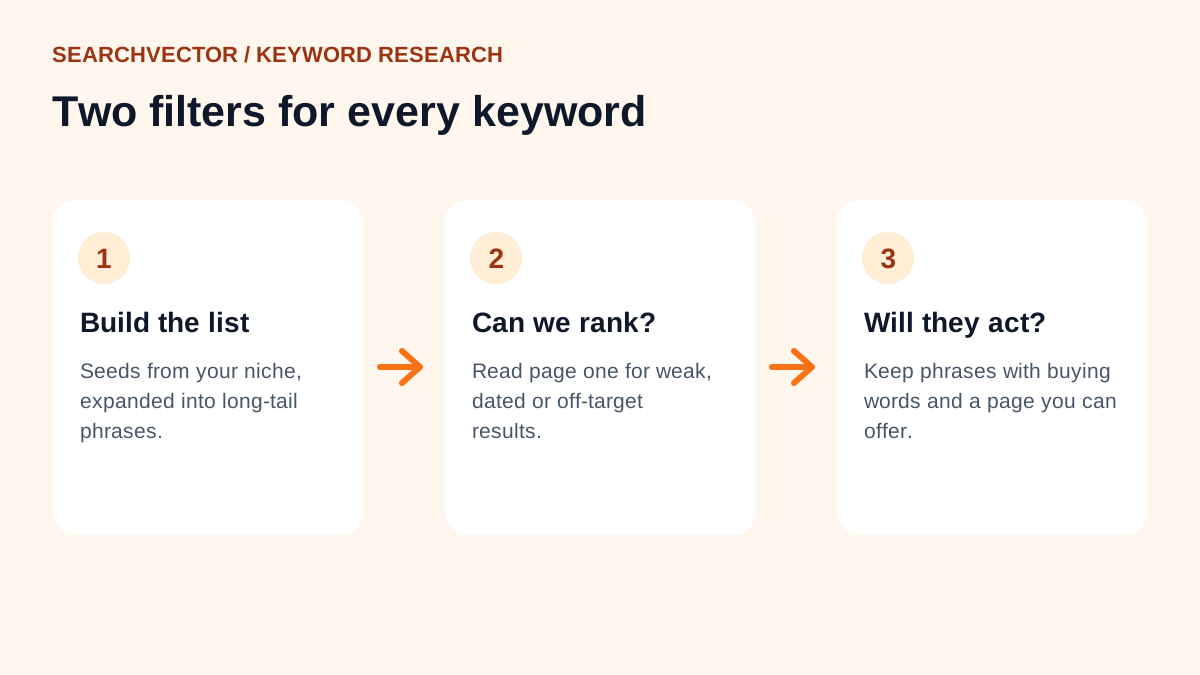
Search your keyword and open the top pins. Read their titles and descriptions. You’ll quickly notice which words keep coming up. That’s a good sign of the language people respond to in your niche.
4. Check Google too
Many people search the same ideas on Google before or after Pinterest. Running a topic through our keyword research tool gives you more phrasing ideas and helps you spot topics that are popular in both places.
How to organise your keywords
Once you have a list, group it by topic. Each group can become a board. For a home decor account, the groups might look like this:
- Small living rooms: small living room ideas, small apartment living room, tiny living room layout.
- Boho bedrooms: boho bedroom decor, boho bedroom ideas cozy, boho bedroom on a budget.
- Balcony gardens: small balcony ideas, balcony garden apartment, balcony plants for shade.
Within each group, pick one main keyword for the board name and use the others on individual pins.
Where to use Pinterest keywords
Your profile
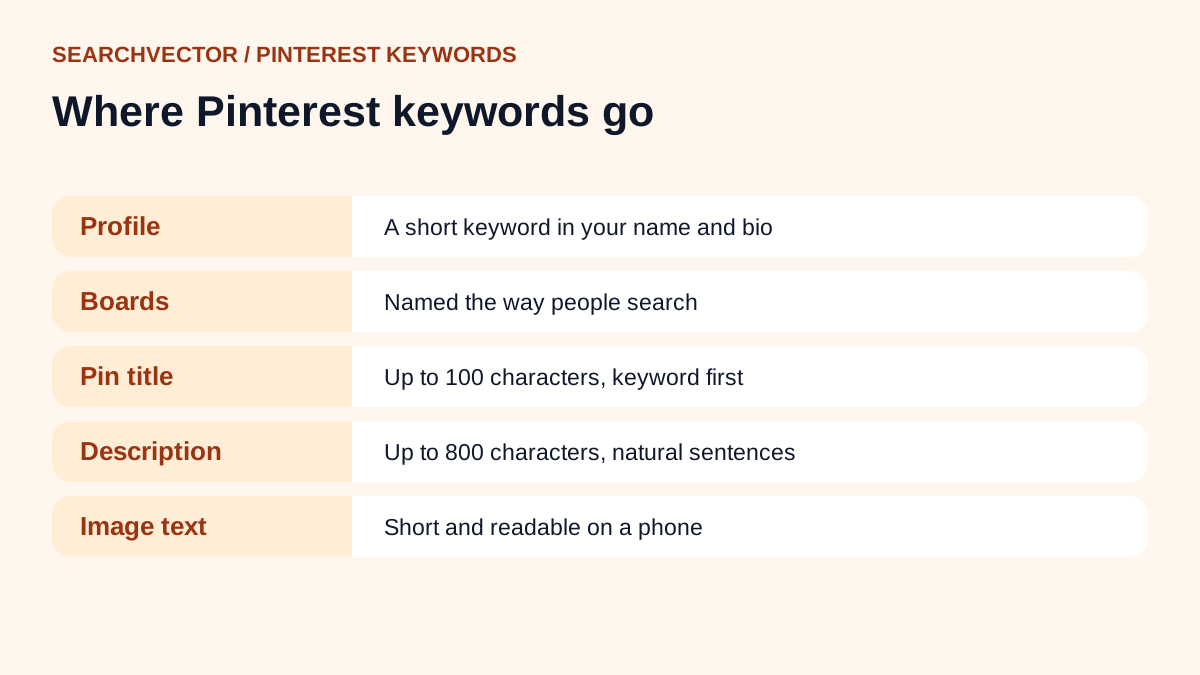
Add a short keyword to your display name if it fits naturally, like “Maya | Small Space Decor”. Use your bio to describe what you pin in plain words a searcher would recognise.
Board names and descriptions
Name boards the way people search. “Small Living Room Ideas” works better than “My Happy Place”. Then write a sentence or two in the board description that uses related keywords and says what the board is for.
Pin titles
Pinterest allows up to 100 characters for a pin title, according to its pin specs. Put your main keyword near the start and make the title describe what the person will get, like “Small Balcony Garden Ideas for Shade-Loving Plants”.
Pin descriptions
You can write up to 800 characters. Pinterest notes that descriptions don’t appear when people view the pin in the home feed or search feed, so the image and title do most of the work there. The description still helps Pinterest understand the pin. Write two or three natural sentences that include your keyword and a few related phrases.
The image itself
Text on the image, like “10 Small Balcony Ideas”, helps people decide to click while they scroll. Keep it short and readable on a phone screen.
A quick example
Say you write a blog post about growing herbs on a balcony. Your research turns up “balcony herb garden”, “herbs for small balcony” and “apartment herb garden ideas”. Here’s how I’d use them:
- Board: Balcony Herb Garden
- Pin title: Balcony Herb Garden: 8 Herbs That Grow Well in Small Spaces
- Pin description: Planning a balcony herb garden? These easy herbs grow well in pots and small spaces, from basil to mint. Ideas for apartment herb gardens, plus watering tips for sunny and shady balconies.
- Image text: 8 Herbs for a Small Balcony
Each placement uses the words naturally. Nothing reads like a list of tags.
Mistakes to avoid
- Stuffing descriptions with a long list of keywords or hashtags.
- Giving boards clever names nobody would search for.
- Using the same title and description on every pin.
- Pinning seasonal content too late to catch the rise in searches.
- Ignoring the image: keywords get you seen, the picture gets the click.
Frequently asked questions
1. How do I find good keywords for Pinterest?
Start with Pinterest’s search bar suggestions and the extra words shown above search results. Then use Pinterest Trends to check when interest in a topic rises.
2. What are the most popular keywords on Pinterest?
Popular searches change with seasons and trends, so a fixed list goes out of date quickly. Pinterest Trends shows what’s popular right now in your region and category.
3. Do hashtags still work on Pinterest?
Keywords in your titles and descriptions matter much more than hashtags. If you use hashtags at all, keep them few and relevant.
4. How many keywords should I use per pin?
There’s no set number. Use one main keyword in the title and a few related phrases in the description, written as normal sentences.
5. Is Pinterest SEO the same as Google SEO?
The idea is similar: match the words people search. The difference is that Pinterest is visual and inspiration-led, so images and descriptive, aesthetic phrases matter more.